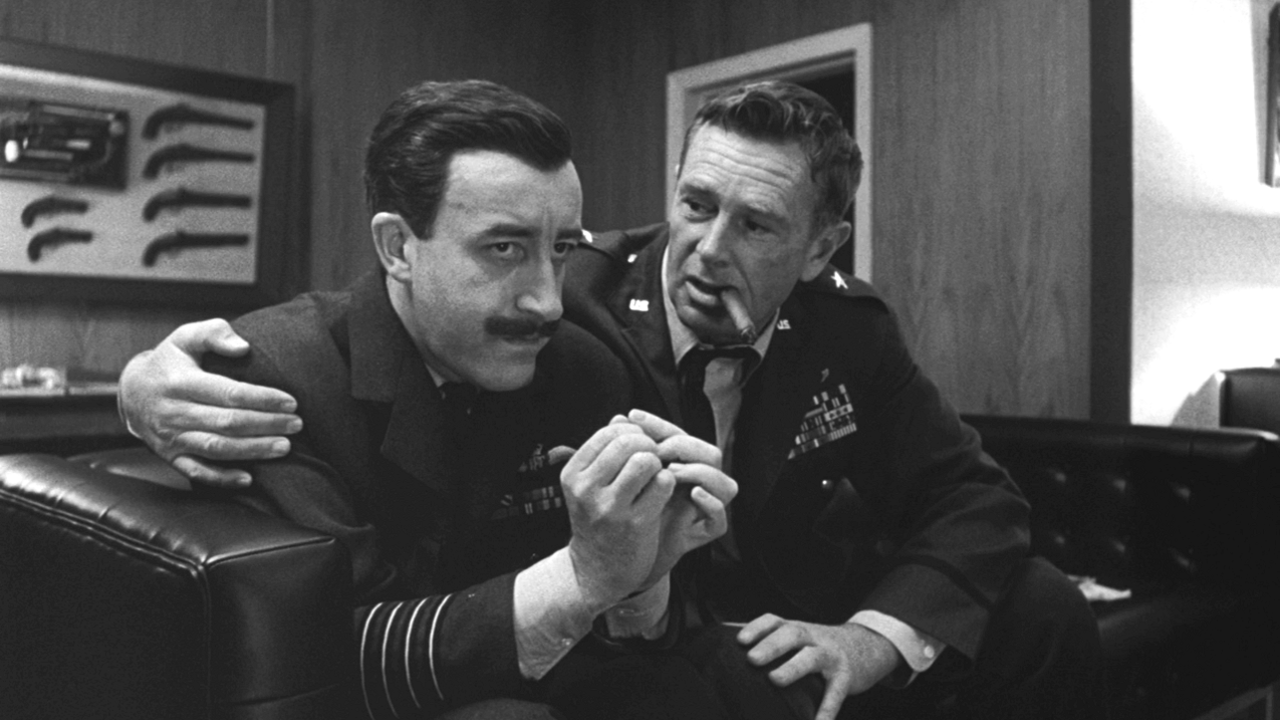
Yes, it’s a little pocket of insanity but does it have something to teach us?

A few months ago there was a screen shot of a clinic note floating around the internet. It was, in the words of another nephrologist the most passive-aggressive nephrology consult note I have read in a long time:

Patient’s sodium dropped further to 120 in the evening. He has had a precipitous drop that I suspect is due to over-diuresis, which does not seem to be a diagnosis within the lexicon of heart failure cardiologists. It is possible that he could have developed SIADH, through a drug side effect. In any case, we have reached the usual place where attempts to fix the heart have blithely interfered with renal physiology, and I am not willing to let his serum sodium decline into the 110s. If we give NS, and he has SIADH, we will worsen his serum sodium. We could use 3% NS, but he is not having mental status changes, yet, and this is bad form for a patient in heart failure. If he is volume depleted, and we use conivaptan, he could develop hypotension which would be difficult to fix. So I seem to have been finagled into ordering tolvaptan, which will hopefully prevent any further decrease tonight. Tolvaptan fixes a number and has not been shown to improve clinical outcomes with chronic use.

Clearly there is a large dose of crazy in the assessment and plan, but it highlights a number of real issues in hyponatremia. Let’s dissect the note a bit and tease out the best parts.

The first clam that over-diuresis does not seem to be a diagnosis within the lexicon of heart failure cardiologists seems to be true. A brief survey of google finds a paucity of relevant hits for the phrase and most of those are from nephrologists or family practitioners. Given the frequency that I see patients suffering from this I was a bit shocked at these results.

The next sentence seems a bit preposterous, It is possible that she could have developed SIADH, through a drug side effect. Presuming that a patient with heart failure induced hyponatremia now has a second denovo disease seems a bit of a stretch, but we don’t have access to the clinical data and so it is hard to determine if this is true. However the definition of SIADH requires that patients be euvolemic and judging from as much of the story as we know it seems like this patient is clinically hypervolemic. This rules out a clinical diagnosis of ADH, because the release of ADH in heart failure is due to physiological trigger for ADH, a decrease in perfusion. The disease of SIADH is specifically reserved for patients in which there is no physiologic stimuli for ADH release. The presence of heart failure and volume overload, definitionally rule out SIADH.

The next sentence is interesting: In any case, we have reached the usual place where attempts to fix the heart have blithely interfered with renal physiology, and I am not willing to let his serum sodium decline into the 110s. Diuretics increase water and sodium loss, but the cation content of the urine is almost always significantly lower than the plasma cation content, urinary sodium with loop diuretics is typically around 70 mmol/L. So use of loop diuretics cause loss of relatively more water than sodium and result in hypernatremia, except in heart failure. To understand why, one needs to understand electrolyte free water clearance (and an example of using it in the treatment in hypernaatremia is here). The higher the free water clearance, the less prone patients are to hyponatremia. Here are the calculations for electrolyte free water clearance for a patient with hyponatremia due to CHF before and after the addition of loop diuretics:

Before diuretics

In CHF, the patient is actually doing a pretty good job clearing free water. More than half of the urine output is electrolyte free water, the character of the urine is appropriate for correcting the hyponatremia. The problem is not the character of the urine but the amount. The patient just doesn’t make enough urine to generate adequate electrolyte free water to account for the water the patient is drinking. Water restriction will be effective for these patients.

So, if the problem is an inadequate amount of urine the logical next step would be to increase the volume of urine with a diuretic:

With diuretics

Unfortunately, though the diuretic increases the volume of urine, it also changes the character of the urine. In this case, it dramatically increases the urine sodium content. This makes the urine almost completely ineffective at removing electrolyte free water and the net result is that the electrolyte free water clearances actually falls with the addition of the diuretic. This is the trap our poor nephrologist is raging against.

The next sentence of the rant: If we give NS, and he has SIADH, we will worsen his serum sodium. We could use 3% NS, but he is not having mental status changes, yet, and this is bad form for a patient in heart failure. I have a problem with this sentence and do not think it is well thought out. The nephrologists clearly believes this patient is over diuresed, we see this situations all the time and they respond briskly to additional fluids. Don’t complain that the patient has been overdosed with diuretics and then refuse to provide the antidote for this overdose. I am skeptical of his theory that the patient has SIADH and it is a bit unreasonable to even give a trial of 0.9% saline. In regards to 3% saline, our good doctor might want to take a look at some of the data on the use of 3% saline in heart failure: SMAC-HF (PDF) or Seminars in Nephrology summary. While it is not standard of care the data are certainly intriguing and when the traditional approach is not helping the patient, as apparently is occurring in this patient, it may be worth a look.
The next sentence is regarding conivaptan: If he is volume depleted, and we use conivaptan, he could develop hypotension which would be difficult to fix. Conivaptan is a non-selective vasopressin antagonist, as opposed to tolvaptan which is a selective V2 receptor antagonist. Blocking V1 could cause hypotension as has been reported in multiple case reports. See this open access review.

So I seem to have been finagled into ordering tolvaptan, which will hopefully prevent any further decrease tonight. Tolvaptan fixes a number and has not been shown to improve clinical outcomes with chronic use. This complaint that tolvaptan fixes a number seems a bit obtuse for a nephrologists who was presumably consulted to fix a number. It also implies that tolvaptan is unique in that it has only been shown to fix a number. Well unfortunately, all the therapies of hyponatremia, outside of acute symptomatic hyponatremia have only been shown to fix a number. However given the profound morbidity associated with low sodium, it seems judicious to correct hyponatremia until data proves it is unhelpful. Additionally, to claim in one sentence that you refuse to allow the sodium to fall below 120 and in the next sentence to rail against a therapy that has only has been shown to fix a number seems to belie a profound lack of self awareness.
But keep fighting the good fight against the cardiologists, somebody needs to keep their egos in check. #PracticallySurgeons

Last chance to vote

The longest tradition in the nephrology blogosphere, the Renal Fellow Network’s Nephrology Story of the Year! For five years RFN has been posting the top stories of the year and for the last few years they have been off loading the work to the crowd. So do your duty and vote.

Go vote

Polls close tomorrow. 

And to the losers stuffing the ballot box for “Perivascular Gli1+ progenitors contribute to myofibroblast pool leading to fibrosis in multiple organs including kidney Cell Stem Cell” I will not stand for that!

I’m pulling for Dendritic cell isoketals activate T cells and promote hypertension as covered in NephJC.

The newest nephrology blog: Nephrology Tweetbook

Run by master tweeter Nikhil Shah, Nephrology Fellow at the University of Alberta, Nephrology Tweetbook is primarily a collection of educational tweets with, as far as I can tell, a single long form post on the use of What’s App as an educational tool. Very interesting use of the app.

I’m not sure what he is using to post the tweets to blogger, but he would get better, most useful posts if he used the embed code from twitter.

This is what his posts look like:

No active links.

If he were to use the embed tool in twitter it would look like this:

Nephrology Tweetbook: Text to Treat!! Yes yes yes! @ASNKidney http://t.co/OFVcLAq1TA
— Nikhil Shah (@dr_nikhilshah) December 8, 2014

Nephrology Tweetbook: NAGMA – Review. @kidney_md http://t.co/sLjWb9jPZU
— Nikhil Shah (@dr_nikhilshah) December 8, 2014

Nephrology Tweetbook: Say “PEE” photographing urine! @edgarvlermamd @nejm http://t.co/x8EkFogfjY
— Nikhil Shah (@dr_nikhilshah) December 8, 2014

It’s a nice addition to the nephrology social media landscape.

Nephrology is rusting (Updated)

Another year, another horrible match.

Here is the press release: NRMP SMS Nephrology Match for Appointment Year 2015

Some of the highlights:

  • 68 of 134 programs did not fill their positions
  • There were 0.68 applicants for every fellowship position this is down from 1.5 applicants for every position in 2010
Onecurious aspects to the report: the authors wrote:

In AY2015, nearly every nephrology applicant matched, for a 95.2% Match rate.

But take a look at the table:

254 applicants and 254 positions filled, unless an applicant is doing double duty at a couple of programs, it looks like a 100% match rate.

The other fact that I’d like to know more about is there are 141 US medical schools, 6 of those are too new to have any graduates applying to nephrology, that leaves 135 producing 79 applicants. That means at least 56 did not produce a single nephrology applicant. And I bet at least a couple of schools send multiple grads to satisfying careers in nephrology.

What I want is a list of the schools who are failing nephrology and who is teaching nephrology at those locations. Let’s put their heads on a stick.

On the other side of that coin is who is teaching at the schools that produce multiple nephrology applicants and what are they doing right. Lets give those teachers a medal.

Can we get the medical school data from NRMP?

@kidney_boy might be worthwhile looking at schools who train high # of students who want to be kidney docs, see what they do “right?”
— Heather Murray (@HeatherM211) December 4, 2014

Social media session at ASN Kidney Week

At the 2014 Kidney Week the ASN hosted the first session on social media. The session was moderated by Mathew Sparks and Kenar Jhaveri.

The session had four speakers:

  1. Bryan S. Vartabedian, MD. led off the session with his talk, The Public Physician: The Emerging Role of the Physician in a Connected, Always-On World. 
  2. Margaret S. Chisolm, MD. followed with her talk on Social Media Challenges to Professionalism: Do the Rules Change or Do We Change Social Media?
  3. The next speaker was a rarity at Kidney Week, a patient. Sarah E. Kucharski gave a highly personal story: Patients Turning Likes and Retweets into Healing: Social Media and the Age of the Empowered ePatient.
  4. I anchored the session with a talk titled, Social Media: How to Get Started, which would have more properly titled, Twitter for Nephrons.
A recreation of my talk is below, and you can also download the Keynote slides here.
Dr. Chisolm’s persentation is here:

Kidney Talk – Created with Haiku Deck, presentation software that inspires

Matt did a great job of summarizing the Session for AJKDblog.
If you want to see the tweets during the two hour session and the hour afterwards, here is a transcript, (and part 2)with 534 tweets during the session and the one hour after. It is contaminated with other KidneyWk tweets so you have to filter through the list but there are some gems.
Here is a filtered and curated transcript:

Kidney Week Approaches


Next week the nephrology world will gather in Philadelphia for the annual ASN Kidney Week. This will be the most social Kidney Week ever. If you are interested in social media and nephrology I’d like to call your attention to a handful of events:


Thursday November 13 ASN Special Session on Social Media. 10:30 in Room 201C. This is the first time social media has been covered a part of the core curriculum at ASN. It should be awesome. ASN has assembled an all-star team to present:
Thursday at 12:45 CJASN and the guys from eJC will be running a session on doing A Better Journal Club. I think I will be speaking for 5 or 10 minutes about my experience with NephJC. Room 104 of the Pennsylvania Convention Center.
Thursday night at 8:30 pm, Blogger Night (after the ASN Presidents Reception). If you like the Neph Social Media Crew from Twitter, Renal Fellow Network, AJKDblog or NephJC, join us for drinks at Field House Philly. It is a sports bar. Look for me in the AJKD hat.
Saturday 10-12 Poster Session. SA-PO661 NephMadness Poster session. Sucks that I’ll have to miss late breaking trials, what is usually the best session of the week, but oh well. I’ll have to keep up via Twitter.
Saturday 12:30-1:20. NephJC Live. NephJC is doing a live ancillary session. We will take the awesome dynamic of the twice monthly twitter chats and see how well it translates to a live session. We have two young investigators presenting data.
The first is Deirdre Sawinski, MD, Assistant Professor from University of Pennsylvania who is going to speaking on her study of kidney transplants in HIV positive patients.
The second is Francis Wilson, MD who will be presenting data from a recently completed RCT on acute kidney injury. In addition to a platinum pated CV he is an experienced singing waiter so hopefully we will get an ad hoc performance.
NephJC Live will also be awarding the first Nephrology Social Media Awards. We will be giving awards for best tweeter, best new tweeter, best blog post about the conference and best curtain of the conference (best Storify related to ASN Kidney Week) I will have a post on the Social Media Awards later this week-end.
The thing about the NephJC Live is that if you want to come you need to register by Sunday, November 9 so we can buy you lunch. Registration closes on Sunday. Register now.

Ever heard of Chinese Restaurant Syndrome? Updated

From a letter in the 1968 NEJM:

Ever heard of Chinese Restaurant Syndrome? http://t.co/VO7pvItjDF Anyone know if he ever got an answer? pic.twitter.com/zdgBIagW72
— Joel Topf (@kidney_boy) October 9, 2014

In a world full of weird coincidences, just days after that tweet, Ira Flatow from Science Friday fame covered Chinese Food Syndrome:

Omg! Science Friday with Ira Flato just referenced Chinese Food Syndrome and that letter from 1968. Weird. http://t.co/oOmvsXnN4Z
— Joel Topf (@kidney_boy) October 10, 2014

Questioning Medicine, sweet podcast.

This morning I received this tweet:

https://t.co/CKcoDOQAE4 @kidney_boy most recent podcast we find a way to make u rich @ 2:45 pic.twitter.com/6eyVJHXmGn
— Andrew Buelt DO (@AndrewBuelt) October 3, 2014

Somehow it reminded me of an email I once received from Nigeria:

REQUEST FOR URGENT BUSINESS RELATIONSHIP 

FIRST, I MUST SOLICIT YOUR STRICTEST CONFIDENCE IN THIS TRANSACTION. THIS IS BY VIRTUE OF ITS NATURE AS BEING UTTERLY CONFIDENTIAL AND ‘TOP SECRET’. I AM SURE AND HAVE CONFIDENCE OF YOUR ABILITY AND RELIABILITY TO PROSECUTE A TRANSACTION OF THIS GREAT MAGNITUDE INVOLVING A PENDING TRANSACTION REQUIRING MAXIIMUM CONFIDENCE. 

WE ARE TOP OFFICIAL OF THE FEDERAL GOVERNMENT CONTRACT REVIEW PANEL WHO ARE INTERESTED IN IMPORATION OF GOODS INTO OUR COUNTRY WITH FUNDS WHICH ARE PRESENTLY TRAPPED IN NIGERIA. IN ORDER TO COMMENCE THIS BUSINESS WE SOLICIT YOUR ASSISTANCE TO ENABLE US TRANSFER INTO YOUR ACCOUNT THE SAID TRAPPED FUNDS. 

THE SOURCE OF THIS FUND IS AS FOLLOWS; DURING THE LAST MILITARY REGIME HERE IN NIGERIA, THE GOVERNMENT OFFICIALS SET UP COMPANIES AND AWARDED THEMSELVES CONTRACTS WHICH WERE GROSSLY OVER-INVOICED IN VARIOUS MINISTRIES. THE PRESENT CIVILIAN GOVERNMENT SET UP A CONTRACT REVIEW PANEL AND WE HAVE IDENTIFIED A LOT OF INFLATED CONTRACT FUNDS WHICH ARE PRESENTLY FLOATING IN THE CENTRAL BANK OF NIGERIA READY FOR PAYMENT. 

So I hid my checkbook before I went and checked out the podcast. No worries, they never asked me to send any money to complete the download or authorize my listening. It was just a great medical podcast. The two hosts have excellent chemistry and the discussion was astute and evidence based. I highly recommend it.

You can find Questioning Medicine in iTunes.