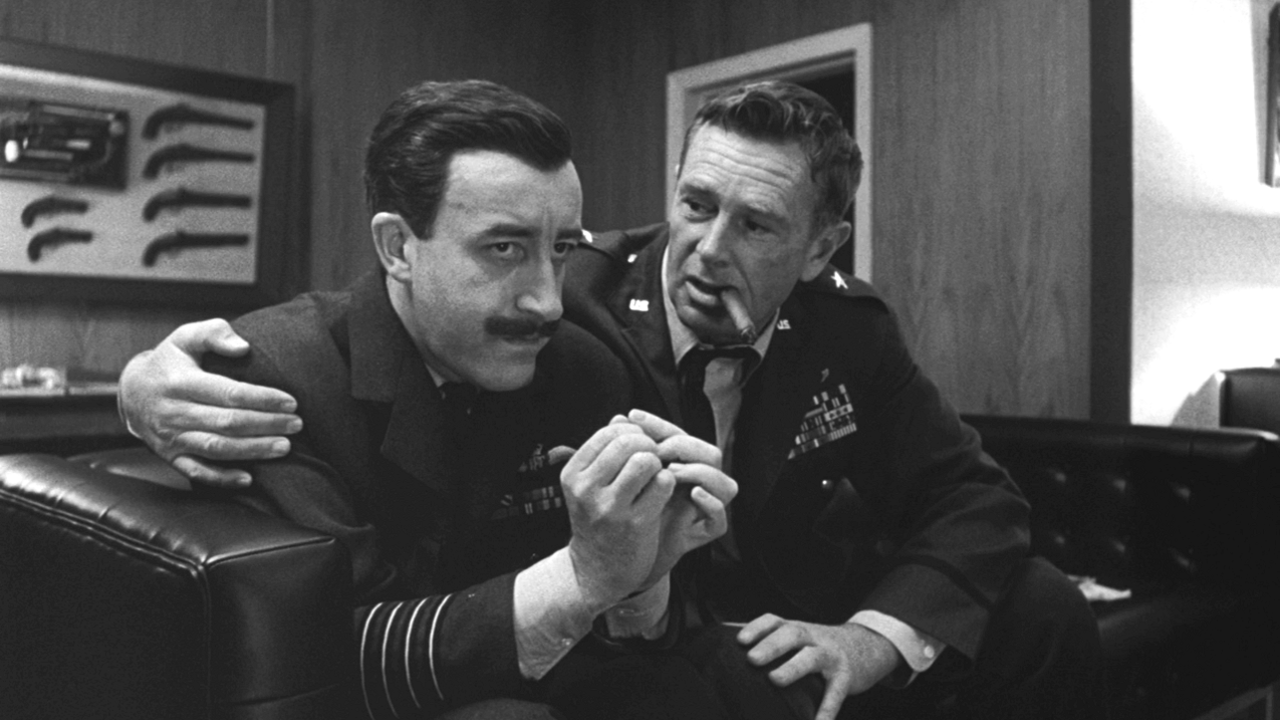
Confirmation bias, cognitive dissonance, and contrast nephropathy

I have been following the research of McDonald which repeatedly shows no signal of contrast nephropathy when looking at large databases.

Controlled contrast medium-induced nephropathy studies demonstrate a similar incidence of AKI, dialysis, and death between the contrast medium group and control group.

This was just a curiousity that felt like the work of a magician because no matter how many different ways that McDonald et al tried to prove there was no contrast nephropathy, I had seen it with my own eyes. I had seen young people with a normal creatinine who were completely stable go for a contrasted CT scan and then spiral into renal failure in subsequent days. No one could convince me that this was incidental renal failure. Renal failure just doesn’t happen like that.

The best I could do to explain away the work of McDonald was to say that she is a radiologist so it must be biased in favor of her procedure/specialty. I know this is weak sauce but the I had seen it with my own eyes could not be silenced. Then Chertow. Here was the most prominent nephrology clinical trialist of our time coming to the exact same conclusions as the radiologists.

…the incremental risk of AKI that can be attributed to radiocontrast is modest at worst, and almost certainly over- estimated by patients, physicians, surgeons, radiologists, and other decision-makers.

I have been trying to reconcile this cognitive dissonance and this is where I am: The decision to use changes in creatinine to define contrast nephropathy results in a definition that captures lots of false positives.

Definition of contrast-induced nephropathy (CIN): impairment of renal function defined as either a 25% increase in serum creatinine (SCr) from baseline or 0.5 mg/dL (44 µmol/L) increase in absolute value, within 48-72 hours of intravenous contrast administration.

Note, that unlike the definitions of other entities like hepatorenal syndrome, there is no exception if there are alternative explanations for the renal failure. Any patient with sepsis, hypotension, and a complete breakfast of aminoglycosides, ketorolac, and ramipril that happens to get a contrasted CT scan followed by a bump in the creatinine is another case of contrast nephropathy. Though being admirably sensitive, this definition is wildly non-specific.

So the key question in evaluating the definition of contrast nephropathy is what proportion of cases are real cases of contrast nephropathy as opposed to incidental AKI that happen to occur after contrast exposure. In other words how many of those contrast nephropathies are false postives. To reconcile my experience and Chertow’s data I have shifted my position from being mostly true positives with a small amount of noise to mostly noise with only a few cases of true contrast nephropathy.

Once you accept that the the majority of cases of contrast nephropathy are just incidental cases of AKI, other facts start to come into focus. For example, look at the risk factors for contrast nephropathy:

  • CKD
  • Diabetes mellitus
  • Advanced age
  • High contrast dose
  • NSAIDs
  • ACEi
  • Heart failure
  • Balloon pump
  • Volume depletion
  • Hypotension
  • Shock

How many of those are also risk factors for AKI in general? Outside of contrast dose, I’d say all of them.

How about the interventions we do to reduce contrast nephropathy:

  • Avoid diuretics
  • Avoid NSAIDs
  • Stop ACEi/ARBs
  • Give IVF (and 0.9 NS is better than 0.45 NS)

This looks like a pretty good recipe for avoiding AKI in general.

Why is this important? Well for one I think our research is lying to us. I have been surprised on multiple occasions that the patients that get contrast nephropathy don’t fit the model of the high risk patient and likewise patients that are set-ups to get contrast nephropathy don’t. Our models are so overwelmed with incidental AKI that they do not give us a good idea of the people who are truly at risk of real contrast nephropathy.

I wonder, if we were to do a careful analysis of contrast nephropathy cases where we excluded every case that could have an alternative explanation of AKI, to produce a cohort of people with a very low rate of false positives. How different would the risk factors for contrast nephropathy look like in that cohort? I suspect contrast nephropathy would look more like an idiopathic condition.

Question from OUWB M2 on SIADH

Another question from the e-mail

I am trying to understand why SIADH does not cause edema. I understand that in SIADH, there is an increase in Total Body Water, as the increased ADH causes increased water reabsorption. However, there is no change in total body sodium. This implies that the issue is a euvolemic hyponatremia. I would imagine that with total body water increase, there is increased ECF and therefore increased capillary hydrostatic pressure. How come this doesn’t result in edema?

This is a question I get every year.

The question comes from a student with clear thinking about SIADH. And it is true that careful and precise measurements of total body water will show that people with SIADH have excess total body water, so they are not truly “euvolemic.” But we use the term euvolemia here because they are in sodium balance. Their sodium intake equals their sodium excretion:

This is very different than patients with hypervolemic hyponatremia (heart failure and liver failure) where sodium intake is much greater than sodium excretion. With positive sodium balance (total body sodium increases everyday) heart failure patients develop progressive and clinically evident edema.

The other way to look at the increased water that patients have with SIADH is to quantify it. If a patient with SIADH drops their sodium from 140 to 120 they have dropped there sodium by 14%. This comes from an increase in total body water of 14%, so in a 70 kg young man (42 liters total body water), this represents a increase in total body water of 5.88 liters. Two thirds of this water would be intracellular, so only 2 liters would be extracellular. In heart failure, dogma states people gain 5 kilograms of body weight before they develop clinically evident edema. Since the edema is from excess sodium all of this fluid gain is extracellular. So the amount of water that needs to be retained to lower the sodium 20 points, is less than half the amount that is needed to cause clinically evident edema.

Question from OUWB M2s on potassium excretion

Here is the question:

Regarding potassium secretion, I’m having a little trouble understanding one concept: increased flow rates with the collecting tubules results in increased potassium secretion. Say a person is on a loop diuretic and their flow rates are increased. I understand that increasing sodium delivery will result in more potassium secretion, but how does the flow rate affect it? 

I would’ve guessed high flow rates would decrease sodium re-absorption and therefore decrease potassium secretions.

My answer was just a figure from The Fluid and Electrolyte Acid Base Companion:
  The idea is that increased tubular flow has two interrelated explanations for why it increases potassium excretion. 
  1. The first is that when potassium excreted by either the ROMK or Big K channel, potassium in the tubule then will decrease the chemical gradient from in the cell to out of the cell. By increasing the tubular  flow potassium is quickly washed away, maintaining (or refreshing) the chemical gradient. 
  2. The second is that increased tubular flow is really synonymous with increased sodium delivery. This sodium is then sucked up by the eNaC allowing the generation of the electronegative tubule increasing the excretion of potassium.

Top Tweets from the last year

The Twitter analytics page is just an amazing trip down the memory hole. If you haven’t checked it out, do so. Some highlights from the last year:

August

Critical care is getting weird: Glasgow Cellphone Scale pic.twitter.com/cCLFQAx55x

— Joel Topf, MD FACP (@kidney_boy) August 30, 2016

Runner-up

Just another night on call… pic.twitter.com/r8qnKFKU5x

— Joel Topf, MD FACP (@kidney_boy) August 27, 2016

June

Social media is a place where even introverts can can develop a valuable support network for the hardest job #meded

— Joel Topf, MD FACP (@kidney_boy) June 17, 2016

June runner-up

Alex Djuricich a Tribute in Tweets https://t.co/Fo0VxaWmXV pic.twitter.com/9OCR5PB0hV

— Joel Topf, MD FACP (@kidney_boy) June 15, 2016

May

This heart rate of 16 is brought to you by the letter K and the number 7. Today’s lesson: ARBs and ACEi don’t mix pic.twitter.com/SYZiGN1LoD

— Joel Topf, MD FACP (@kidney_boy) May 22, 2016

May runner-up

Clever dialysis sweatshirt allows access to the fistula. https://t.co/Nb7yWVVNMC pic.twitter.com/FHjqzLZfUt

— Joel Topf, MD FACP (@kidney_boy) May 20, 2016

April

Negative anion gap. Serum osmolality over 300. Normal glucose. What do you look for? pic.twitter.com/ogISE0T98h

— Joel Topf, MD FACP (@kidney_boy) April 24, 2016

March

— Joel Topf, MD FACP (@kidney_boy) March 1, 2016

March runner-up

Concerned that Recreational drug region of #NephMadness means nephrons are druggies? Lowest use of weed among docs pic.twitter.com/myyZdHmYqq

— Joel Topf, MD FACP (@kidney_boy) March 21, 2016

February

Interesting. Antihypertensive side effects are dose dependent except ACEi.https://t.co/vE5FUnJmtm pic.twitter.com/BpC34lY3P8

— Joel Topf, MD FACP (@kidney_boy) February 5, 2016

January

Best thing I have learned today, from https://t.co/wESDDFB29y pic.twitter.com/lkwpGuwWbT

— Joel Topf, MD FACP (@kidney_boy) January 8, 2016

January runner-up

In 2014, KI did pro/con reviews on NS vs balanced IVF. This is from the pro-NS conclusion:https://t.co/N2Ab9yrCUe pic.twitter.com/sflu4rLELd

— Joel Topf, MD FACP (@kidney_boy) January 14, 2016

December

Medicine before ePocrates pic.twitter.com/TYbcQyaxDl

— Joel Topf, MD FACP (@kidney_boy) December 13, 2015

Question from the OUWB M2s

This question came via e-mail:

A couple of my classmates and I had a question regarding one of your slides (slide 39 on the Potassium, Metabolic Alkalosis presentation). We were unsure of the mechanisms that prevented bicarbonate excretion with hypokalemia, specifically decreased NaK2Cl activity in the loop of Henle and decreased NaCl resorption in the distal convoluted tubule. Could you please give us an explanation for these mechanisms?

So the reason you can’t remember a mechanism is I gave the old “just because” mechanism without much explanation.
The first step of why the the Na-K-2Cl transporter slows own in response to a low K is pretty sraight forward. Tubular potassium will fall as patients get hypokalemia. As the plasma potassium falls, less and potassium is filtered and then less potassium will be available to cycle the Na-K-2Cl pumps. The decreased activity in the loop of Henle results in more distal delivery of sodium and that drives move acid secretion and maintenance of the metabolic alkalosis.
The distal convoluted tubule is a bit more complex. Here is a diagram:
The hypokalemia stimulates the hydrogen-potassium exchanger. This generates intracellular acidosis, even though the patient has alkalosis. In order to correct the acidosis the cell slows sodium-chloride co transport so more sodium washes down stream and stimulates the hydrogen secretion, maintaining the alkalosis.
If you are looking for a deeper dive into metabolic alkalosis I recommend this review by Galla in JASN

OUWB Resources 2016

Here is the PDF of today’s Acid-Base Workshop

There is a typo on slide 111 of the the acid-base lecture:

here is the correct table. Sorry.

8 AM Tuesday lecture

Potassium metabolic alkalosis and hypertension:

Introduction to potassium lecture:

Video 

part 1:

part 2:
Greatest Potassium Lecture Ever…part 2 from joel topf on Vimeo.

Part 3:
Greatest Potassium Lecture Ever…part 3 from joel topf on Vimeo.

Monday’s Lecture:

  • Introduction to Acid Base, deep dive into metabolic acidosis (keynote | PDF)

Wednesday’s lecture in Keynote format

When the medical students come in all excited to learn about sodium and water: https://t.co/6dFCfONZqf

— Joel Topf, MD FACP (@kidney_boy) August 9, 2016

The reading material for the TBL

TBL today: @kidney_boy‘s reaction when my team decided to raise the patient’s serum K conc. to 6mmol/L in 2 hr pic.twitter.com/A88vS76Hbz

— Noah Kline (@NoahKline) August 11, 2016

More links to be added shortly.

My talk on the evolution of the medical textbook and the role of social media

One of the most exciting thing I have ever done was speak at dotMed this past February. I blogged about it. My talk just got pushed out to youtube.

The idea underlying the talk is that the medical textbook holds a central role in the education of physicians. Over the years, the textbook evolved from a single author text like Osler’s to the multi-author textbook like Harrison’s, to the online, digital solution like UpToDate.

I speculate that the next evolution will incorporate mobile and social elements and then proceed to show how the nephrology social media collective is using social tools to deliver compelling medical education. Enjoy.

Seminal Articles in Health Policy

So this is a little out of my wheelhouse, but yesterday this tweet came across my tweet stream:

If you had to pick seminal articles in health policy all residents should know, what would you choose?@RealCedricDark @AriBFriedman @MDaware

— Vidya Eswaran (@vidyaeswaran) May 16, 2016

Ari Friedman replied

Arrow 63, Pauly 68, Cutler Reber 98, Finkelstein *, Cohen 08, Burns Pauly 12. https://t.co/ayxlRhMoVU

— Ari Friedman (@AriBFriedman) May 16, 2016

Which was simultaneously a great answer and kind of useless. He then sent me a bibliography, here is his list with links:

  1. Arrow K. Uncertainty and the Welfare Economics of Medical Care. 1963;53(5). (PDF)
  2. Pauly M. The economics of moral hazard: comment. American Economic Review 1968;58(3):531–7.  (PDF)
  3. Cutler DM, Reber S. Paying For Health Insurance: The Trade-Off Between Competition And Adverse Selection. The Quarterly Journal of Economics 1998. (PDF)
  4. Taubman SL, Allen HL, Wright BJ, Baicker K, Finkelstein AN. Medicaid Increases Emergency-Department Use: Evidence from Oregon’s Health Insurance Experiment. Science 2014;343(6168):263–8.  (PDF)
  5. Cohen JT, Neumann PJ, Weinstein MC. Does Preventive Care Save Money? Health Economics and the Presidential Candidates. N Engl J Med 2008;358(7):661–3.  (PDF | NEJM)
  6. Burns LR, Pauly MV. Accountable Care Organizations May Have Difficulty Avoiding The Failures Of Integrated Delivery Networks Of The 1990s. Health Aff 2012;31(11):2407–16. (PDF)
Cedric Dark tweeted:
I have an entire reading list for #Emed #HealthPolicy I could share with you

— Cedric Dark (@RealCedricDark) May 16, 2016

I will add to this when he gets back to me.