Dr. James Chang of the personal finance blog, PoorMD, has written a parody of Dr Seuss’ classic Oh, the Places You’ll Go!


musings of a salt whisperer
Dr. James Chang of the personal finance blog, PoorMD, has written a parody of Dr Seuss’ classic Oh, the Places You’ll Go!
This graph from wikipedia allows you to see how different substances concentration in blood varies. Who new that the lowest molar concentration of all was PTH?

A patient came to the hospital with a swollen arm. The ED suspected a DVT and ordered a doppler ultrasound which confirmed their suspicion. The admission labs included a chem-7 which revealed a potassium of 7. Her creatinine was 1 and she wasn’t taking an ACEi, ARB, aldactone, ketoconazole, or potassium supplements. The ER was surprised and repeated the study and checked an EKG:
 |
| Narrow QRS and unimpressive T-waves |
The EKG gave no hint of hyperkalemia, though EKG changes are not a sensitive marker for hyperkalemia. The ED gave insulin, glucose and Kayexalate for the lab finding of hyperkalemia. We were consulted to determine the cause of the hyperkalemia. The patient’s past medical history was significant for primary thrombocytosis and during the hospital stay her platelet count rose to over a million.
 |
| dats a lot o’platelets |
We presumed that his hyperkalemia was actually pseudohyperkalemia due to the high platelet count. Platelets release potassium when they clot and the risk of pseudohyperkalemia rises as the platelet count approaches a million.
 |
| You remember this classic NEJM article from 1962. |
We then sent the patients blood to the ABG lab in a heparinized syringe rather than a red top and the potassium normalized. Platelets release potassium when they are activated. By measuring the potassium in whole blood rather than serum, the contribution of platelet activation is prevented. The ABG results are the electrolytes to the far left in the screen-grab below (click to enlarge).

– Posted using BlogPress from my iPad
 |
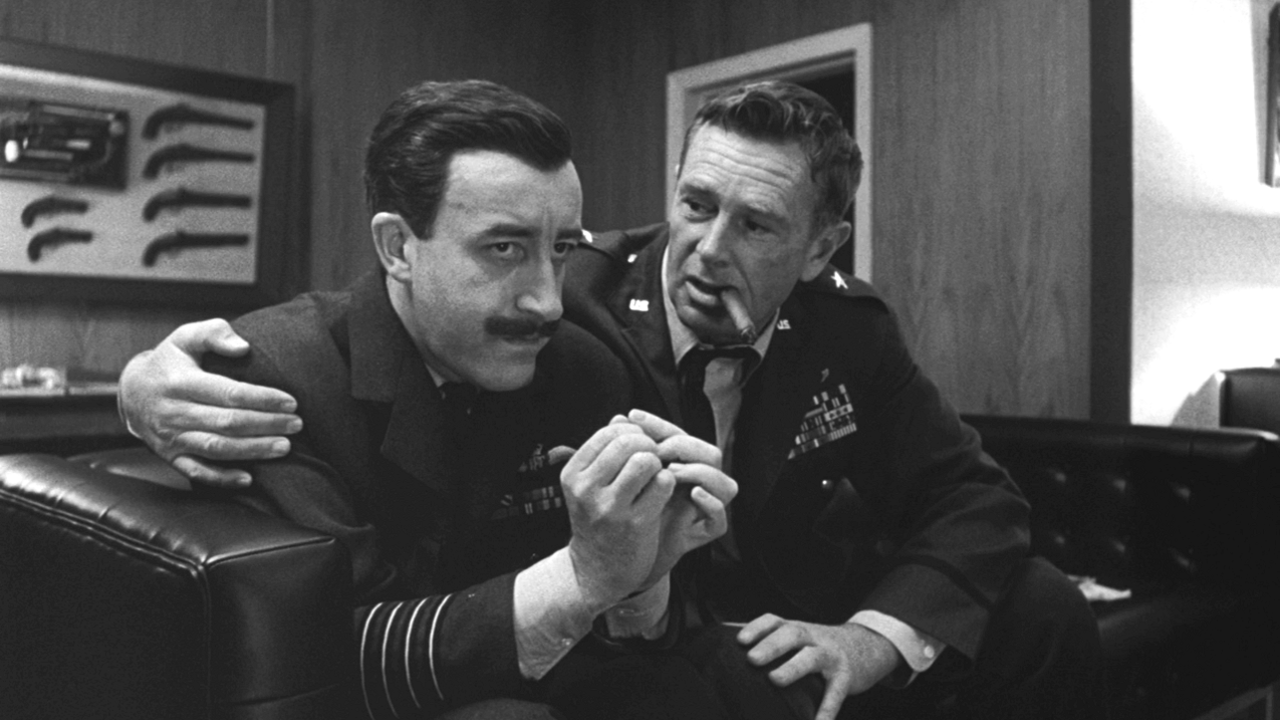
| General ‘Buck’ Turgidson listening to Premier Kissoff |
Mr. President, we are rapidly approaching a moment of truth both for ourselves as human beings and for the life of our nation. Now, truth is not always a pleasant thing. But it is necessary now to make a choice, to choose between two admittedly regrettable, but nevertheless distinguishable, postwar environments: one where you got twenty million people killed, and the other where you got a hundred and fifty million people killed.
 |
| Peter Seller’s best movie? |
From If We Don’t Remember Me.


 |
|
Angioedema: Two cases of angioedema with respiratory symptoms were reported with Tekturna use in the clinical studies. Two other cases of periorbital edema without respiratory symptoms were reported as possible angioedema and resulted in discontinuation. The rate of these angioedema cases in the completed studies was 0.06%. In addition, 26 other cases of edema involving the face, hands, or whole body were reported with Tekturna use including 4 leading to discontinuation. In the placebo controlled studies, however, the incidence of edema involving the face, hands or whole body was 0.4% with Tekturna compared with 0.5% with placebo. In a long term active control study with Tekturna and HCTZ arms, the incidence of edema involving the face, hand or whole body was 0.4% in both treatment arms [see Warnings and Precautions (5.2)].
Hypertensive emergencies are characterized by severe elevations in BP (>180/120 mmHg) complicated by evidence of impending or progressive target organ dysfunction… Examples include hypertensive encephalopathy, intracerebral hemorrhage, acute MI, acute left ventricular failure with pulmonary edema, unstable angina pectoris, dissecting aortic aneurysm, or eclampsia.
Strange that acute renal failure is not mentioned as a complication. The recommendation is to reduce the blood pressure by no more than 25% in the first minutes to an hour and subsequently shoot for 160/100 for the next 2-6 hours. The authors point to 2 exceptions: aortic dissection where the SBP should be less than 100 and in acute stroke where the data is less clear. (a moment of clairvoyance for the JNCVII crew as they correctly predicted the lack of benefit from aggressive blood pressure control in the midst of an acute stroke. This was confirmed with 2011’s SCAST study)
 |
| Meta-analysis showing the lack of benefit from blood pressure treatment in acute stroke |
 |
| IV blood pressure agents helpful in hypertensive emergency from JNCVII |
The first article we looked at was Bert Jan van den Born’s retrospective review. These authors looked at patients with malignant hypertension. Cases were identified by looking at every hospital admission with the diagnosis of hypertension and then screening the charts for an ophthmology exam showing:
 |
| Wonderful pic of cotton-wool exudates and splinter hemorrhages. Thanks ACP |
 |
| Flame hemorrhages. Without permission from AAO |
If I had to wait for an ophtho consult to make a diagnosis, half my patients would be ready for discharge with the diagnosis still pending.
After patients were deemed to have hypertensive urgency, they were categorized as having MAHA. This was defined as a low platelet count with either an elevated LDH or schistocytes. Additionally the LDH/schistocytes and the platelets had to recover following recovery from the hypertensive crisis.
The endpoints were creatinine and proteinuria at admission and follow-up creatinine.
The study found 110 patients that met the criteria, and 97 were ultimately available for analysis.
 |
| To convert creatinine from micromol to mg/dl, divide by 88 |
Improvement of renal function, defined as a reduction of serum creatinine >50% compared with baseline, was noted in 17 patients during follow-up. Cox regression analysis showed that MAHA and systolic blood pressure at admission were the most powerful indicators of renal improvement with an HR of 0.24 (95% CI, 0.08 to 0.75) and 1.02 per mm Hg increase in systolic blood pressure (95% CI, 1.01 to 1.05; Table 4). Improvement of kidney function over time in patients with and without MAHA is shown in Figure 4.


The third article was a case report and lit review by Shavit et al. The article defines malignant nephrosclerosis as renal failure due to malignant hypertension. They describe three cases with varying outcomes:
They mention research finding low levels of ADAMTS13 in malignant hypertension. ADAMTS13 level fall as LDH levels rise and platelet count fall. A follow-up study of 21 patients failed to confirm these findings.
The next article we pulled was by Akimoto et al, Clinical Features of Malignant Hypertension with Thrombotic Microangiopathy. This was retrospective review of 16 cases of malignant hypertension. MH was defined as an elevated blood pressure with retinal changes. MAHA was defined by an increase in LDH, low hemoglobin and low haptoglobin. Additionally to meet the definition of MAHA patients needed to normalize these indices after correction of the blood pressure. Of note 7 patients had biopsies. Five of those biopsies showed evidence of malignant nephrosclerosis (fibrinoid necrosis) but only 3 of them met the authors’ clinical definition of MAHA. Interesting that those reasonable clues could be missing 40% of cases.
They found higher aldosterone levels in patients with MAHA than in patients without. They found a tight correlation between aldosterone levels and LDH, R2 of 0.4 (p=0.0096).

Four of the seven patients with MAHA required dialysis, however 2 were able to come off. Three of the nine patients without MAHA required dialysis and none recovered renal function.


I was browsing the Renal Fellow Network and saw a link to a website I hadn’t previously heard of, cyberNephrology. It had a prominent position on the list of Other Nephrology-Related Blogs, so I went to check it out. The prefix cyberis very 1990’s and cyberNephrology does not disappoint it. It has that a few years after the zombie apocalypse feel.
Starting at the top the What’s New page links to a pair of talks from 2009.
The three large banners are role overs that open to text based pages. The communication page is essentially a link to an E-mail discussion group. In today’s world of Twitter and Facebook are e-mail discussion groups relevant? Hint: No.
According to cyberNephrology, e-mail discussion groups are not only a relevant form of communication, they are the only forms of communication.
The additional resources includes a link to the Highlights of the Nephrol e-mail discussion list, last updated in 2000. A link to a Nephrology Internet Bibliography, last updated in 2002.

The nephrology related websites is a page of links to a couple of dozen large institutions and a handful of defunct links to smaller sites, The Catalan Transplant Foundation (now a squatters site) KidneyWeb (a site that brings back memories of the worst of GeoCities), e-dialysis.org (now behind a paywall). Amazingly this page claims it was updated in January 2011, though they don’t show any link-love back to the Renal Fellow Network.


Pay to Play: Should Registered Organ Donors Get Priority as Recipients?
Could fixing (or more realistically improving) organ allocation be this easy?
We’re here to make a dent in the universe. Otherwise, why even be here? We’re creating a completely new consciousness, like an artist or a poet. That’s how you have to think of this. We’re rewriting the history of human thought with what we’re doing. –Steve Jobs

I was sad to hear the news of Job’s resignation from Apple. My wife and I watched Pirates of Silicon Valley as a toast to the man who I view as a modern Leonardo De Vinci. A genius who revolutionized our world.
 |
| It was 2006 and all I had with me was a Palm Treo |
Later that night, my wife and I saw a show (I think it was Avenue Q) and then went to check out the scene at the Cube. We waited in line and went down into the store on opening night. It’s the only Apple event I’ve witnessed.

 |
| Still smiling after saying hi to Steve hours earlier, and my extremely understanding wife |
I want to create a series of buttons to give to residents and students to mark achievements in nephrology.
One of the common resident complaints regarding nephrology is that it’s too hard. The nephrologist response to this complaint is usually to deny the difficulty, because its not hard for the nephrologist. Perhaps that denial is counterproductive, first it’s hard to disrupt a widely held belief that is continually reinforced by the community of medicine, secondly when you deny the difficulty you insult the intelligence of the student struggling with new concepts. Its essentially saying, “Hard? differentiating among the pulmonary renal syndromes is easy, what are you stupid?”
Instead of denying the difficulty we should re-frame the meme. Yes, nephrology is hard and look how cool it is that you mastered these concepts.
Merit badges, or pieces of flare as my fellow interjected, would add levity and encourage residents to tackle deeper concepts.

 |
| Follow the link to interpret your score |
As I finished up this post I noticed that I had previously created the tag “Nerd Humor.” Having a nephrology blog with that tag should be worth 5 points, minimum.
